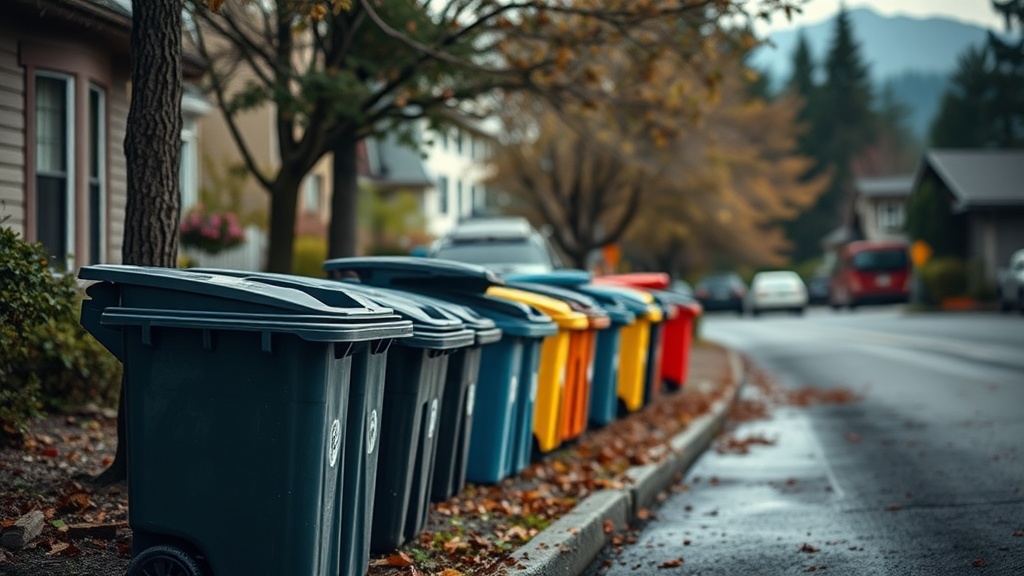
Whistler's Curbside Collection Schedule and Recycling Guide for Residents

What Does Whistler's Curbside Collection Schedule Look Like?
Whistler's curbside collection runs on a biweekly schedule for garbage and alternating weeks for recycling and organics. If you're tired of chasing down collection days or finding surprise bags left behind, this guide lays out exactly when to put bins out — and what actually belongs in them. Getting it right keeps our community's streets cleaner and avoids those frustrating rejection stickers from Waste Control Services, the contractor handling Whistler's residential pickup.
Here's how the rhythm works in most Whistler neighbourhoods. Garbage collection happens every other week — that's your black cart for household waste that can't be recycled or composted. Your blue cart (recycling) and green cart (organics/food scraps) alternate weeks. So if recycling's this week, organics wait until next. The catch? Holiday schedules shift everything by a day, and Whistler's winter weather can delay pickups without much warning.
Collection typically starts early — trucks roll through neighbourhoods beginning around 7:00 AM. In Whistler's denser areas like Whistler Cay Heights or Nordic, bins need placement by the curb (or designated collection point) no later than 7:00 AM on your scheduled day. Some strata complexes in Benchlands and Blackcomb have centralized collection areas instead of curbside — check with your building manager.
Winter brings its own complications. During heavy snowfall, Whistler's narrow streets become treacherous for collection vehicles. The Resort Municipality of Whistler (RMOW) updates residents on delays through their website and social channels. That said, you don't want to be the neighbour whose buried bin gets skipped because snow removal blocked access.
What Can You Actually Recycle in Whistler?
Most paper, plastic containers, metal cans, and glass bottles go into your blue cart — but not everything with a recycling symbol belongs there. Whistler follows Recycle BC's guidelines, which are stricter than what many residents expect. Understanding these boundaries keeps contamination low and ensures your materials actually get processed rather than landfilled.
Your blue cart accepts: newspapers, magazines, office paper, cardboard (flattened), paper egg cartons, plastic bottles and tubs with recycling symbols 1-7, metal food and beverage cans, aluminum foil and trays (clean), and glass bottles and jars. The key is cleanliness — a peanut butter jar with residue contaminates an entire load. Rinse it out.
Worth noting: plastic bags, film wrap, and styrofoam don't belong in curbside blue carts. These require drop-off at Recycle BC depots. The Nesters Market area has a depot accepting these materials, as does Function Junction's industrial zone. Many Whistler residents accumulate plastic film over winter — from grocery bags to bread bags — and feel frustrated they can't toss them curbside. The depot drop is your path.
Here's a quick reference for common items:
| Item | Blue Cart? | Where It Goes |
|---|---|---|
| Newspapers, cardboard | Yes | Blue cart — flatten boxes |
| Plastic bottles (#1-7) | Yes | Blue cart — rinse first |
| Glass jars | Yes | Blue cart or separate bin by area |
| Plastic bags, film | No | Recycle BC depot (Nesters, Function Junction) |
| Styrofoam | No | Recycle BC depot only |
| Pizza boxes (clean) | Yes | Blue cart — grease-stained goes to organics |
| Shredded paper | Yes | Bagged in paper bag, blue cart |
For the definitive current list, Recycle BC's recycling guide stays updated with any program changes. The RMOW also maintains local recycling information specific to Whistler that accounts for our mountain town's unique logistics.
How Does the Organics Program Work for Whistler Homes?
Your green cart accepts all food scraps, food-soiled paper, and yard trimmings — turning Whistler's organic waste into compost instead of landfill methane. The program runs weekly in summer (May through October) and biweekly through winter when decomposition slows. If you're new to the green cart, it changes how you kitchen pretty significantly.
Food scraps include fruit and vegetable peels, meat and fish (yes, including bones), dairy products, eggs and eggshells, bread and grains, coffee grounds and filters, tea bags, and leftover cooked food. Food-soiled paper — napkins, paper towels, pizza boxes with grease stains, and unlined paper plates — also belongs here. Yard trimmings during growing season fill out the cart.
The green cart excludes pet waste, diapers, textiles, and any plastics labelled "compostable" or "biodegradable." Here's the thing about those compostable forks and cups from village restaurants — Whistler's composting facility can't process them. They go in the garbage. The industrial composting process here doesn't reach high enough temperatures to break down bioplastics. It's counterintuitive, but those "eco-friendly" disposable containers are landfill-bound in our community.
Most Whistler homes received a countertop food scrap bin and compostable bags when the program launched. If you need replacements, the RMOW provides them at Municipal Hall on Blackcomb Way. Some residents prefer using newspaper to line their countertop bins instead of bags — both work fine.
What About Hazardous Waste and Special Items?
Paints, batteries, electronics, and chemicals don't belong in any curbside cart. Whistler residents have access to several options for keeping these materials out of landfills. The RMOW hosts annual roundup events, and year-round depots handle ongoing drop-offs.
Call2Recycle bins at grocery stores and municipal buildings accept household batteries and cell phones. Small electronics — anything with a cord or battery — can go to the Return-It Electronics depot in Function Junction. Paint and flammable liquids require special handling; the BC Product Care recycling program operates depots accepting these materials, including the Squamish landfill location a short drive south.
Large items like furniture and appliances need different handling. Whistler's Waste Control Services offers large-item pickup by appointment for a fee. Alternatively, the Re-Build-It Society in Function Junction accepts usable furniture and building materials for resale — keeping items circulating in our community rather than crushing them at the landfill.
Holiday Schedules and Weather Delays
Christmas Day, Boxing Day, and New Year's Day shift Whistler's collection schedule. When your regular day falls on or immediately after a statutory holiday, pickup moves one day later for the entire week. Thanksgiving and Remembrance Day don't typically affect service — but check the RMOW website during winter storm events.
January and February bring the heaviest snow loads. Collection trucks can't handle unplowed streets in Brio or parts of Alpine Meadows. The RMOW prioritizes snow removal on collection routes, but residents need to clear bins and surrounding areas. A bin frozen to the ground or buried in plow ridges won't get emptied — and you won't get a return trip until your next scheduled collection.
Reducing Waste in a Mountain Town
Whistler's remote location means our garbage travels further than most — adding transportation emissions to every bag. The community's goal of diverting 75% of waste from landfills requires residents to think beyond the three carts. Repairing gear at The Re-Use-It Centre, buying bulk at Green Moustache or Olives Community Market, and choosing products with minimal packaging all reduce what hits the curb.
Consider what happens to your waste after the truck disappears. Whistler's garbage rides to the Squamish landfill — a haul that costs our municipality significant fuel and tipping fees. Every kilogram diverted through proper recycling and composting saves money that supports other community services. That's not abstract policy — it's your tax dollars working differently.
The Resort Municipality provides free waste coaching for confused residents. If you're staring at an item wondering which cart — or if you're a new homeowner in Emerald Estates or Kadenwood figuring out collection day — call the RMOW's environmental services team. They'll walk through your specific situation without judgment. Whistler's waste system only works when enough residents participate correctly — contamination undermines the whole program.
Your collection day, acceptable materials, and proper preparation matter. Get these basics right, and you're contributing to a cleaner, more efficient Whistler — one bin at a time.