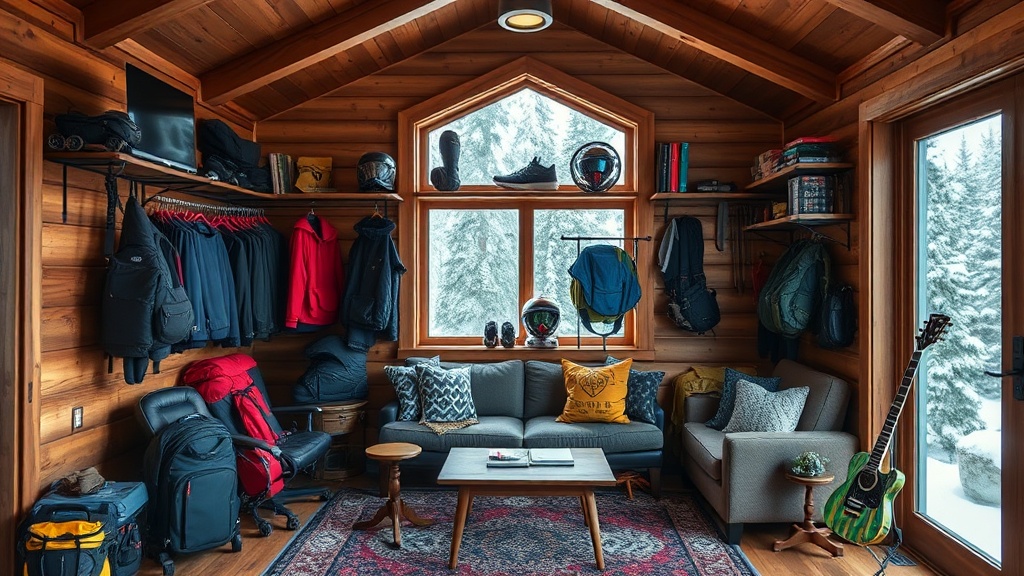
How to Fit All Your Outdoor Gear in a Whistler-Sized Home

Why Is Gear Storage Such a Challenge in Whistler Homes?
Where exactly are you supposed to fit six pairs of skis, three bikes, climbing gear, and a paddleboard in a 600-square-foot Alpine Meadows condo? If you have lived in Whistler for more than one season, you have probably asked yourself this question while staring at a hallway clogged with equipment that costs more than your monthly rent. We have accepted that living in this mountain town means trading square footage for trail access — but that does not mean we have to live in chaos.
The reality of Whistler's housing market is that most of us rent compact units in buildings like those along Nordic Drive, Emerald Estates, or the denser pockets of Creekside. Ownership is increasingly rare, and even those who have managed to buy often find themselves in efficient — read: small — spaces designed to maximize land use, not store your quiver. When you factor in Whistler's four-season playground mentality, the gear multiplies quickly. You are not just storing winter equipment or summer toys; you are storing both, often simultaneously, while handling tight corners and even tighter rental agreements that prohibit hallway clutter.
The challenge becomes more than aesthetic — it is functional. In a town where you might ski Whistler Blackcomb in the morning and mountain bike the Valley Trail in the afternoon, you need systems that work fast. You cannot spend twenty minutes unburying your boots from behind the recycling bin. Locals here develop storage strategies out of necessity, and the best ones borrow from the efficiency principles you see at the Municipality of Whistler's own facilities — everything has a place, and every place serves multiple purposes.
Where Can You Store Seasonal Items You Don't Need Year-Round?
The first rule of Whistler gear management: if you are not using it this month, it should not be in your immediate living space. That sounds obvious until you realize your powder skis are blocking the dishwasher in July. Seasonal rotation is key, but where do you actually put the off-season gear?
Function Junction — the industrial area south of the Village along Highway 99 — has become the unofficial storage district for savvy locals. Several storage facilities there offer units ranging from closet-sized to garage-sized, and splitting a larger unit with roommates or neighbors is a common Whistler hack. If you have driven past those low warehouses near the Re-Use-It Centre, you have seen where half the ski patrol stores their summer gear. The rates are generally more reasonable than adding another bedroom to your rental budget, and the access is convenient enough that swapping seasons does not feel like a major expedition.
For smaller items — think avalanche safety equipment, climbing uses, or that inflatable SUP you use exactly twice per summer — investigate under-bed systems and vertical closet organizers. The Whistler Public Library occasionally hosts workshops on small-space living (yes, really), and local organizers often share creative solutions like ceiling-mounted cargo nets or modular wall systems that would not violate your lease. If you own your place, built-in bench seating with deep storage compartments can transform a Nordic or Brio townhouse entry from a shoe-explosion zone into a functional mudroom.
How Do You Organize Active Gear for Daily Use?
The gear you use weekly — sometimes daily — needs to be accessible but not invasive. This is where Whistler locals get inventive, because nobody wants to trip over ski boots on their way to make coffee at 6 AM before first tracks.
Wall-mounted solutions are your best friend. Vertical ski racks that hold boards parallel to the wall save more floor space than freestanding options, and they keep your equipment visible — which means you will actually remember to wax those bases. In tighter Village condos where every square foot counts, over-door organizers designed for closets can be repurposed for gloves, goggles, and base layers. The key is creating zones: a "drying zone" near your best heat source (usually a baseboard heater or wall-mounted unit in Whistler rentals), a "ready zone" by the door, and a "maintenance zone" where tune-ups happen.
Speaking of maintenance — doing your own ski servicing saves money but creates mess. A small folding workbench that stores against a closet wall, combined with a drip-catching mat, lets you edge and wax without destroying your security deposit. Many locals in the Alpine and Emerald neighborhoods use their balconies for this purpose, though you will want to be mindful of your downstairs neighbors and the strata rules that govern most Whistler multi-family buildings. The Municipality's emergency preparedness guidelines also recommend keeping some supplies easily accessible, so your storage system should account for flashlights, first aid kits, and maybe that avalanche airbag you hope never to deploy.
What About Bigger Items Like Bikes and Skis?
Bikes present the largest spatial challenge because they are awkwardly shaped, expensive, and oddly fragile for something designed to charge down mountains. Wall-mounted vertical hooks work for lightweight road bikes, but your enduro rig probably needs a sturdier solution. Ceiling hoists — the kind with pulley systems — free up enormous amounts of floor space and can be installed in most Whistler townhomes with minimal structural modification.
For ski storage, the goal is protecting edges and bases from each other. Dedicated ski racks with individual slots prevent the dreaded base-to-edge contact that destroys expensive gear. If you are storing multiple pairs (and let's be honest, you are — this is Whistler), consider a rack system that expands vertically rather than horizontally. Some locals in the more spacious Pemberton Heights or Spruce Grove areas have luck with garage storage, but many Whistler rentals lack dedicated garage space, forcing creative interior solutions.
Do not underestimate the Re-Use-It Centre on Nesters Road for finding storage furniture and organizational tools at Whistler-appropriate prices. The inventory changes daily, and locals regularly donate perfectly good shelving units, storage bins, and even specialized gear racks when they upgrade or (more commonly) move away. It is worth checking weekly during your grocery run to Nesters Market — another ritual that defines local life here.
How Do You Maintain Sanity in a Gear-Filled Home?
The psychological aspect of small-space living with active gear is real. When your living room doubles as a equipment depot, the visual clutter can feel overwhelming. Whistler locals develop strict "one in, one out" policies — sell that old pair of skis before buying the new ones, pass along the bike frame that no longer fits your riding style. The local buy-and-sell culture is strong (check the community boards at Mt. Currie Coffee or the online groups), and gear moves fast in this town.
Another sanity-preserving strategy: the "staging area." Even the smallest Creekside studio can accommodate a dedicated spot — a single hook, a small bench, a specific corner — where tomorrow's gear lives. Everything else stays stored. This prevents the morning scramble and the gradual encroachment of equipment into every livable space. Remember, we choose to live in Whistler for the access, not the apartments. A well-organized 500-square-foot space with everything in its place feels larger and more functional than a cluttered 800-square-foot unit where you cannot find your other glove.
Finally, connect with your neighbors. Whistler's community — particularly in the townhouse complexes of Brio and the duplex neighborhoods near Lost Lake — often develops informal gear-sharing and storage cooperatives. You store the bike trailer; they store the roof box. You borrow their backcountry skis; they use your kayak. It reduces individual storage pressure and builds the kind of relationships that make this town feel like home rather than just a stop on the seasonal worker circuit. That community fabric — the willingness to help each other solve problems like where to put all this stuff — is what separates locals from visitors passing through.